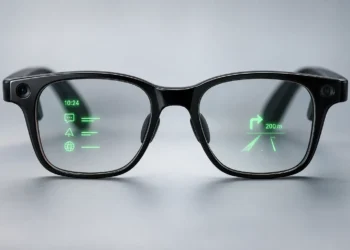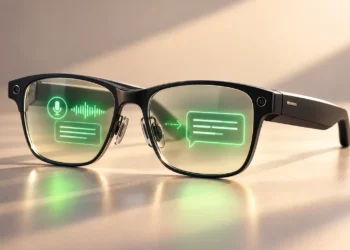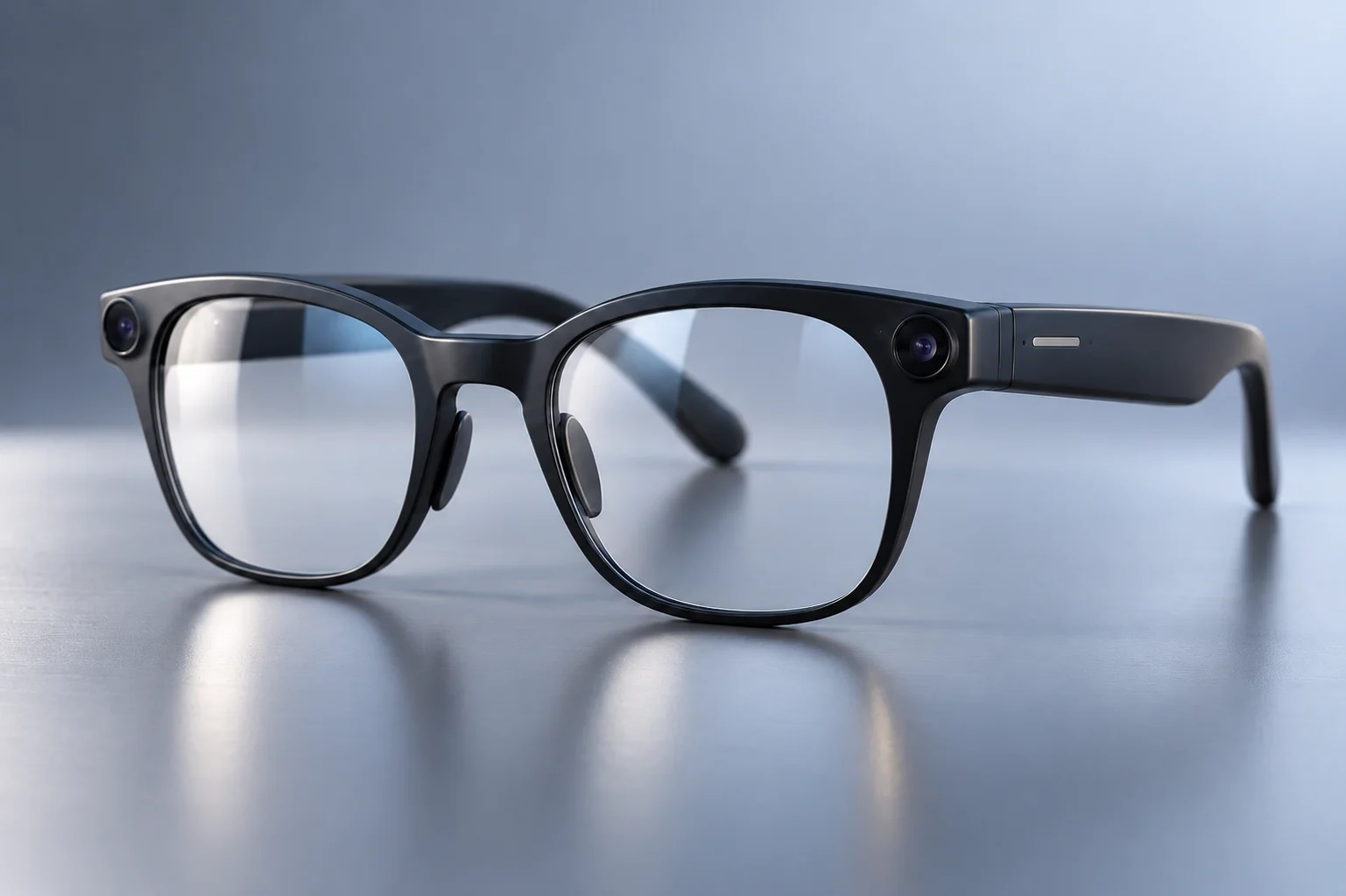

Why would someone want a camera in their glasses instead of relying on a smartphone? For some, it’s about recording daily moments; for others, it’s about AI assistance with objects, text, and their surroundings. Beyond the camera, battery life, video quality, AI capabilities, and price can vary considerably between models.
We’ve listed six AI glasses with cameras, covering everyday photography, sports, translation, and augmented reality.
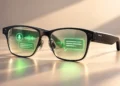
Our top picks at a glance
Ray-Ban Meta (Gen 3) — Best Overall: With a 12MP camera, 3K video recording, and Meta AI, these glasses cover everyday photos, videos, and voice assistance. Battery life is up to nine hours.
Oakley Meta Vanguard — Best for Sports: A centered 12MP camera captures first-person footage during outdoor activities, while IP67 protection and Garmin and Strava integration add fitness-related features.
Meta Ray-Ban Display — Best With Display: Alongside its 12MP camera, a full-color display in the right lens shows Meta AI responses, messages, and navigation directions.
Rokid Glasses — Best for Translation: A 12MP camera handles photos and videos, while the binocular MicroLED display shows translated conversations as subtitles directly in the lenses.
HTC VIVE Eagle — Best for Visual AI: Its 12MP ultra-wide camera supports object recognition and written-text translation through VIVE AI. Supported AI services include Google Gemini and OpenAI GPT, depending on the region.
RayNeo X3 Pro — Best for Full-Color AR: A 12MP main camera handles photography, while a second camera supports spatial tracking. Binocular full-color MicroLED displays support AR visuals, while Gemini Live adds conversational AI.
So, how do they actually compare?
Swipe sideways to see every column.
| Product | Best For | Display | Camera | Price (USD)* |
|---|---|---|---|---|
| Ray-Ban Meta (Gen 3) | Everyday use | No | 12MP | From $449 |
| Oakley Meta Vanguard | Sports | No | 12MP | $499 |
| Meta Ray-Ban Display | Display | Full-color, 600 × 600, right lens | 12MP | From $799 |
| Rokid Glasses | Translation | Binocular green MicroLED, 480 × 400 | 12MP | $699 listed price |
| HTC VIVE Eagle | Visual AI | No | 12MP | From $499 (US) |
| RayNeo X3 Pro | Full-color AR | Binocular full-color MicroLED, 640 × 480 | 12MP + spatial camera | $1,299 |
*Prices are in USD and may vary by region, retailer, configuration, and current promotions.
How We Chose
We focused on how the camera contributes to everyday tasks, from taking photos and recording videos to identifying objects, translating text, and accessing AI assistance.
Camera resolution was one factor, but we also looked at video features, display technology, battery life, privacy, prescription support, smartphone compatibility, and price.
The six glasses cover everyday photography, outdoor activities, visual AI, translation, and augmented reality. The selections are based on official product information and research, not hands-on testing.
1. Ray-Ban Meta (Gen 3): Best Overall
Ray-Ban Meta (Gen 3) brings photography, video recording, and Meta AI to familiar Ray-Ban frames. The glasses can also answer questions about objects and surroundings through supported visual AI features.
The 12MP camera supports 3K video recording. Users can take photos and start recordings through voice commands or the dedicated capture button.
Open-ear speakers handle music, calls, and spoken AI responses. Battery life is rated at up to nine hours on a single charge, although actual duration depends on use. The glasses come in Wayfarer, Aviator, and Zena styles.
Important Details
- Camera: 12MP.
- Video: 3K recording.
- AI: Meta AI with visual assistance.
- Battery: Up to 9 hours on a single charge.
- Price: From $449.
Why choose it: Ray-Ban Meta (Gen 3) covers everyday photography, short videos, calls, and spoken AI assistance.
What to consider: There is no in-lens display, and Meta AI features vary by country and language.
Want to check the details yourself? Ray-Ban Meta (Gen 3) · Gen 3 Official Announcement
2. Oakley Meta Vanguard: Best for Sports
Oakley Meta Vanguard focuses on first-person recording for activities like running, cycling, and other outdoor sports.
Its 12MP camera is positioned at the center of the frame, with a 122-degree field of view for capturing a wider scene. Video recording reaches 3K at 30fps, while slow-motion and hyperlapse modes offer additional ways to capture movement.
Garmin and Strava add fitness features to the glasses. With a compatible Garmin device, users can check activity data through Meta AI, while Strava lets users add performance information to recorded photos and videos.
The glasses also feature IP67 dust and water resistance, open-ear speakers, and Meta AI. Battery life reaches up to nine hours of daily use, although actual duration varies.
Important Details
- Camera: 12MP, centered in the frame.
- Video: 3K at 30fps.
- Field of view: 122 degrees.
- Protection: IP67 dust- and water-resistant.
- Price: $499.
Why choose it: Oakley Meta Vanguard suits runners, cyclists, and outdoor enthusiasts who want first-person recordings alongside fitness information.
What to consider: The Oakley Meta Vanguard doesn’t offer prescription lenses. Garmin-related features require a compatible Garmin device, sold separately. At 3K resolution, video recording is limited to three minutes per clip.
Want to check the details yourself? Oakley Meta Vanguard · Official Announcement
3. Meta Ray-Ban Display: Best With Display
Meta Ray-Ban Display features a full-color screen in the right lens, alongside a 12MP camera and Meta AI. The display shows messages, navigation directions, images, and AI responses.
The 12MP ultra-wide camera captures photos and supports video recording at 30fps. Users can also ask Meta AI questions about their surroundings and see supported responses directly on the display.
The included Meta Neural Band uses subtle hand gestures to navigate menus and interact with messages on the display. Live translation captions and notifications can also appear in the lens, giving users access to information beyond spoken responses.
Starting at $799, Meta Ray-Ban Display is a more expensive option than Meta’s camera-and-audio glasses. The main consideration is whether the in-lens features justify the higher price.
Important Details
- Camera: 12MP ultra-wide.
- Display: Full-color, 600 × 600 pixels, right lens.
- Video: Recording at 30fps.
- Battery: Up to 6 hours of mixed use.
- Price: From $799.
Why choose it: Meta Ray-Ban Display is worth considering if you want visual AI assistance alongside everyday photo and video recording.
What to consider: The display appears only in the right lens, while navigation and some Meta AI features depend on location and language availability.
Want to check the details yourself? Meta Ray-Ban Display and Specifications · Meta Neural Band and Features
4. Rokid Glasses: Best for Translation
Rokid Glasses show live translation subtitles in both lenses, making them an option for travelers and people who regularly communicate across languages.
The 12MP camera supports photos, videos, and object recognition. A binocular green MicroLED display shows translated speech, while visual AI features help users identify objects and understand their surroundings.
Online translation covers up to 89 languages. The glasses can also translate written text, including signs and menus.
Important Details
- Camera: 12MP.
- Video: Up to 3K at 30fps (9:16).
- Display: Binocular green MicroLED.
- Translation: Up to 89 online languages.
- Price: $699 listed price
Why choose it: Rokid Glasses help you read translated conversations and understand unfamiliar text while traveling.
What to consider: The display shows green text rather than full-color imagery. Online translation requires an internet connection, while offline translation supports six languages after downloading the required language files.
Want to check the details yourself? Rokid Glasses · Real-Time Translation
5. HTC VIVE Eagle: Best for Visual AI
HTC VIVE Eagle uses its 12MP ultra-wide camera for photos, videos, and visual AI. Beyond recording, the glasses can identify objects, recognize landmarks, and answer questions about nearby surroundings.
VIVE AI can also translate written text, including signs and menus. In certain regions, it supports Google Gemini and OpenAI ChatGPT and uses voice commands to access AI assistance.
A dedicated capture button handles photos and video recording. A recording light indicates when the camera is active, and video recording is disabled when the glasses are removed or the capture light is covered.
Open-ear speakers handle calls, music, and spoken AI responses.
Important Details
- Camera: 12MP ultra-wide.
- Video: 2176 × 2944 at 30fps (US specifications).
- AI: VIVE AI with Google Gemini and OpenAI ChatGPT support in certain regions.
- Protection: IP54 dust and splash resistance.
- Compatibility: iOS 17.6+ and Android 10+.
Why choose it: The HTC VIVE Eagle offers object recognition, written-text translation, and spoken AI assistance, plus photography and video recording.
What to consider: There is no in-lens display, and AI services vary by region. HTC includes 24 months of VIVE AI Plus with a new purchase, while some features require a paid VIVE AI Pro subscription. A compatible smartphone is also required.
Want to check the details yourself? HTC VIVE Eagle · Technical Specifications · VIVE AI and Purchase Details
6. RayNeo X3 Pro: Best for Full-Color AR
RayNeo X3 Pro features two cameras and full-color displays in both lenses for photography, visual AI, and augmented reality.
The 12MP main camera captures photos and videos and supports visual AI. A separate spatial camera supports tracking and positioning for AR features, not everyday photography.
The binocular MicroLED displays show navigation directions, translated text, and other visual information. Gemini Live supports AI conversations, while Creator Mode supports developing spatial AR applications using 6DoF tracking and SLAM.
Important Details
- Main camera: 12MP Sony IMX681.
- Secondary camera: OV Spatial Camera.
- Display: Binocular full-color MicroLED, 640 × 480.
- AI and AR: Gemini Live, 6DoF tracking, and SLAM.
- Price: $1,299.
Why choose it: The RayNeo X3 Pro is a good option for buyers interested in full-color AR, spatial applications, and visual AI.
What to consider: The higher price may be hard to justify if photography and video recording are your main priorities.
Want to check the details yourself? RayNeo X3 Pro · Camera Specifications · Spatial AR and Creator Mode
What to Consider Before Buying AI Glasses With Camera
Camera quality and recording features
All six glasses in this list have a 12MP main camera, but that figure alone doesn’t tell you how good the photos and videos will look.
Also check recording resolution, frame rate, field of view, stabilization, and maximum clip length. A wider field of view can capture more of the surroundings during sports, while clip limits matter if you want to record longer activities.
Visual AI features
Some AI glasses can identify objects, recognize or translate written text, and answer questions about nearby surroundings. The available functions differ between models.
Before buying, check what each AI assistant can do. Some features need an internet connection, support only certain languages, or are available in selected regions.
Display versus glasses without a display
Not every camera-equipped model has a display inside the lenses.
Ray-Ban Meta (Gen 3), Oakley Meta Vanguard, and HTC VIVE Eagle rely on audio for AI responses. Meta Ray-Ban Display, Rokid Glasses, and RayNeo X3 Pro can also show information in the lenses.
A display can help you read subtitles, follow directions, and view notifications. If photography and video recording are your main interests, a model without a display may be enough.
Battery life and recording limits
Battery estimates don’t necessarily indicate how long the glasses can record video continuously.
Duration varies with the activity, and some models limit the length of individual recordings. If you plan to record frequently, check both the published battery figures and video clip restrictions.
Privacy and recording indicators
Pay attention to recording indicators and camera controls, especially when other people are nearby.
Check whether a visible light signals photo or video capture, and review how the glasses store media and process AI requests. A recording indicator does not replace the need to respect other people’s privacy.
Consent requirements and camera restrictions may apply in workplaces, schools, private spaces, and other locations.
Prescription lenses and smartphone support
Prescription options vary by model, and not every lens configuration suits every buyer.
Check whether your prescription is supported and whether you need additional lenses or accessories. Also confirm smartphone compatibility, app requirements, available AI features, and language support before you buy.
Anything else you want to know?
Can AI glasses take photos and record videos?
Yes. Camera-equipped models such as Ray-Ban Meta (Gen 3), Oakley Meta Vanguard, and HTC VIVE Eagle can take photos and record videos using voice commands or controls on the glasses. Video resolution and recording limits vary by model.
Can AI glasses recognize objects through their cameras?
Some AI glasses can identify objects, recognize landmarks, read written text, and answer questions about what the camera sees. Features vary by model, and some AI functions require an internet connection or support only selected languages and regions.
Do AI glasses with cameras need a smartphone?
Smartphone requirements depend on the model. Many glasses use a companion app for setup, media transfers, and settings, while some functions work without an active phone connection. RayNeo X3 Pro also supports standalone operation, although a phone remains useful for certain features.
Which AI glasses with cameras have a display?
Meta Ray-Ban Display, Rokid Glasses, and RayNeo X3 Pro have in-lens displays. Meta Ray-Ban Display shows information in one lens, while Rokid Glasses and RayNeo X3 Pro use displays in both lenses. Screen colors and resolutions also differ.
Can AI glasses with cameras use prescription lenses?
Yes. Selected Ray-Ban Meta (Gen 3) configurations, HTC VIVE Eagle, Rokid Glasses, and RayNeo X3 Pro support prescription options. Lens requirements and supported prescriptions vary by model, so check compatibility before purchasing.